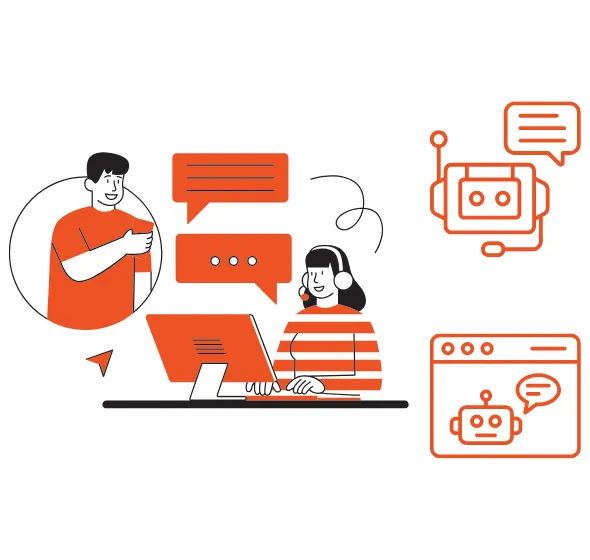


Top Ways AI Chatbots Reshape the Future of Customer Services
Customer service has always been at the heart of every successful business. In earlier times, support was limited to phone calls, emails, and physical visits, often restricted by working hours and human availability. Today, customer expectations have evolved rapidly. People want quick answers, personalized interactions, and seamless support across channels. This growing demand has pushed businesses to adopt smarter technologies, and AI chatbots have emerged as one of the most powerful tools transforming customer service.
AI chatbots are no longer basic rule-based programs that respond with predefined messages. Modern chatbots use advanced technologies such as machine learning and natural language understanding to hold meaningful conversations, understand customer intent, and continuously improve over time. As a result, they are reshaping how companies interact with customers, improve efficiency, and build long-term relationships.

Want to Skyrocket Your Sales Online? Choose The Top Digital Marketing Agency!
Accelerate your online venture with Gandhi Technoweb Solutions’ extraordinary digital marketing experts! Harness superior digital marketing tactics tailored to fit your budget seamlessly.
Below are the top ways AI chatbots are redefining the future of customer service.
1. Providing 24/7 Instant Customer Support
One of the biggest advantages of AI chatbots is their ability to offer support at any time of day. Customers no longer have to wait for business hours or remain on hold to get their questions answered. Whether it is late at night or during peak hours, chatbots are always available.
This constant availability improves customer satisfaction by delivering instant responses. From checking order status to resolving simple issues, chatbots ensure customers feel supported whenever they need help. For businesses, this means fewer missed opportunities and a stronger brand reputation.
2. Reducing Customer Wait Times Dramatically
Long wait times have always been one of the main reasons customers feel frustrated with support services. AI chatbots address this issue by handling multiple conversations simultaneously. Unlike human agents who can manage only a few customers at a time, chatbots can assist thousands of users at once.
By instantly answering common questions and guiding users through basic processes, chatbots significantly reduce queues and delays. Customers receive faster resolutions, and support teams can focus on complex issues that truly require human expertise.
3. Improving Personalization at Scale
Modern customers expect brands to understand their needs and preferences. AI chatbots make this possible by analyzing customer data, past interactions, and behavioral patterns. Based on this information, chatbots can deliver personalized responses, product recommendations, and solutions.
For example, a chatbot can greet a returning customer by name, recall previous purchases, and suggest relevant options. This level of personalization, once difficult to achieve at scale, is now possible through AI-driven automation.
4. Enhancing Omnichannel Customer Experiences
Customers interact with brands across multiple platforms, including websites, mobile apps, social media, and messaging services. AI chatbots help unify these interactions into a consistent experience.
Whether a customer starts a conversation on a website and continues it on a mobile app, chatbots can maintain context and history. This seamless omnichannel support ensures customers do not have to repeat themselves, leading to smoother and more satisfying interactions.
5. Supporting Human Agents Instead of Replacing Them
A common misconception is that chatbots are designed to replace human customer service agents. In reality, the most successful implementations use chatbots to support and empower human teams.
Chatbots handle repetitive and time-consuming tasks such as answering FAQs, collecting basic information, and routing queries. This allows human agents to focus on complex, emotional, or high-value interactions where empathy and critical thinking are essential. The result is a more efficient and balanced support system.
6. Lowering Operational Costs for Businesses
Customer service operations can be expensive, especially as businesses grow. Hiring, training, and managing large support teams requires significant investment. AI chatbots help reduce these costs by automating routine interactions.
By handling a large portion of customer queries, chatbots decrease the need for additional staff while maintaining service quality. Over time, this leads to cost savings without compromising customer experience, making chatbots a strategic investment for businesses of all sizes.
7. Improving Accuracy and Consistency
Human agents, despite their skills, may sometimes provide inconsistent information due to fatigue, misunderstandings, or a lack of updated knowledge. AI chatbots, on the other hand, deliver consistent responses based on centralized data and predefined guidelines.
This consistency ensures that customers receive accurate information every time. As chatbots continuously learn from interactions and updates, their responses become even more reliable, reducing errors and misunderstandings.
8. Leveraging Data for Smarter Insights
Every interaction a chatbot handles generates valuable data. AI chatbots can analyze this data to identify trends, frequently asked questions, customer pain points, and areas for improvement.
Businesses can use these insights to refine their products, services, and support strategies. Over time, chatbot analytics help organizations make data-driven decisions that enhance both customer satisfaction and operational efficiency.
9. Enabling Proactive Customer Support
Traditional customer service is often reactive, responding only when customers reach out with problems. AI chatbots enable a proactive approach by identifying potential issues before they escalate.
For example, chatbots can notify customers about delayed orders, upcoming renewals, or known service disruptions. By addressing concerns early, businesses build trust and reduce the likelihood of negative experiences.
10. Supporting Multilingual and Global Customers
As businesses expand globally, language barriers can limit customer service effectiveness. AI chatbots can be trained to support multiple languages, allowing companies to serve international customers more efficiently.
This multilingual capability ensures customers feel understood and valued, regardless of their location. It also eliminates the need to maintain large multilingual support teams, making global expansion more accessible.
11. Handling High Volumes During Peak Times
During sales events, product launches, or unexpected disruptions, customer service teams often struggle with sudden spikes in demand. AI chatbots excel in such situations by scaling instantly.
They can manage thousands of inquiries during peak periods without performance issues. This scalability ensures consistent service quality, even during high-pressure situations, and protects brands from customer dissatisfaction.
12. Enhancing Customer Engagement and Satisfaction
AI chatbots are becoming more conversational and human-like. They can use friendly language, emojis, and contextual responses to create engaging interactions. Some advanced chatbots can even detect sentiment and adjust their tone accordingly.
These engaging experiences make customer interactions feel less transactional and more conversational, strengthening emotional connections between customers and brands.
13. Driving Sales Through Conversational Commerce
Beyond support, AI chatbots are increasingly used as sales assistants. They guide customers through product discovery, answer pre-purchase questions, and recommend suitable options based on preferences.
This conversational approach simplifies the buying journey and increases conversion rates. Customers feel guided rather than sold to, leading to higher trust and improved purchasing decisions.
14. Continuous Learning and Improvement
One of the most powerful aspects of AI chatbots is their ability to learn continuously. With every interaction, they gather data that helps refine their understanding and responses.
Over time, chatbots become more accurate, more personalized, and more effective. This continuous improvement ensures that customer service quality does not remain static but evolves alongside customer expectations.
15. Shaping the Future of Customer Service Strategy
AI chatbots are no longer optional tools; they are becoming core components of customer service strategies. Businesses that adopt chatbot technology early gain a competitive advantage by offering faster, smarter, and more personalized support.
In the future, chatbots will work even more closely with human agents, predictive analytics, and automation systems to deliver seamless customer experiences. Companies that embrace this transformation will be better equipped to meet evolving customer needs.
Struggling to Rank Higher on Google? Learn How Our Expert Tips Can Boost Your SEO!
Take control of your online presence and dominate the search engine results pages with our proven SEO tactics.
Conclusion
The future of customer service is being reshaped by AI chatbots in powerful and lasting ways. From providing instant 24/7 support to delivering personalized, data-driven experiences, chatbots are redefining how businesses connect with their customers.
Rather than replacing human agents, AI chatbots enhance their capabilities, reduce operational costs, and improve service quality. As technology continues to advance, chatbots will become even more intelligent, empathetic, and essential to customer service success.
Businesses that invest in AI chatbot solutions today are not just improving customer support; they are building stronger, more resilient relationships with their customers for the future.